
What We Hear When We Pull Up
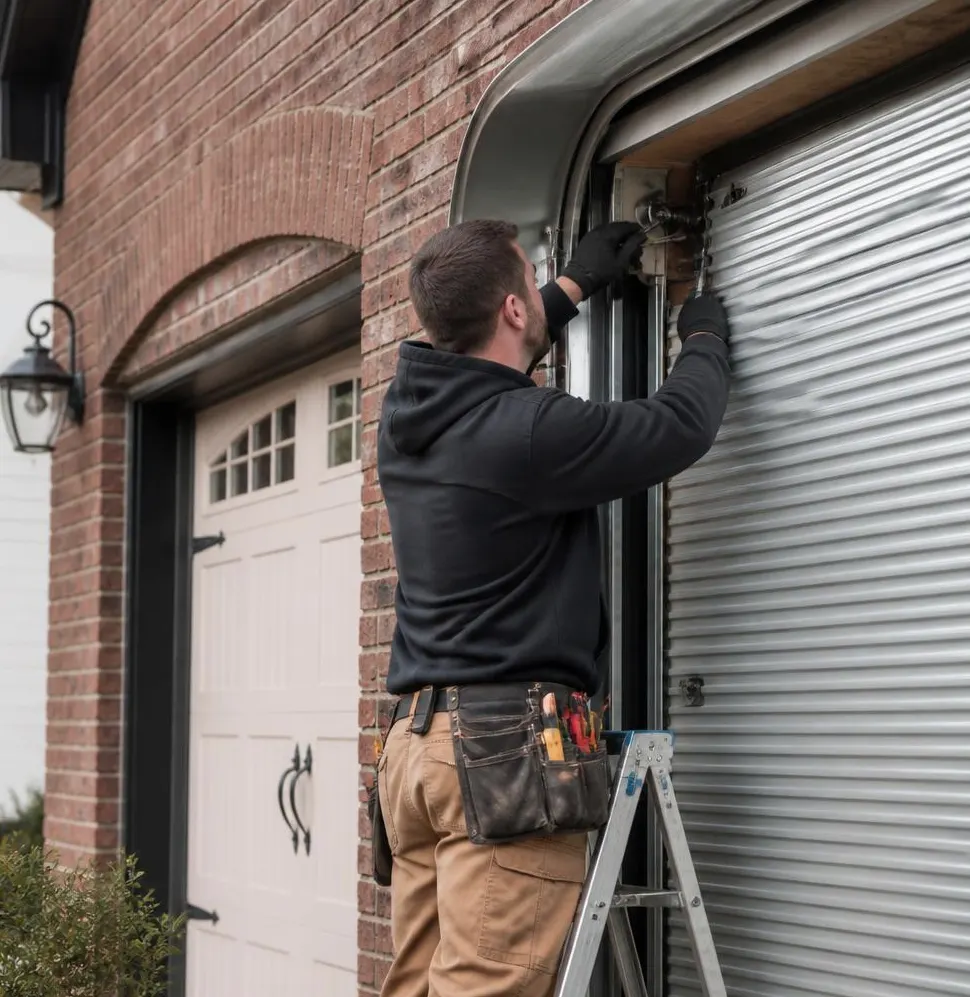
Most noise calls in this area follow a pattern. A homeowner opens the door in the morning, hears something new and unpleasant, and calls before it gets worse. By the time a technician arrives, the door usually still works — it just sounds like it's in pain. The first few minutes aren't spent guessing. We run the door up and down a couple of times, listen for where in the cycle the sound happens, and look at the obvious wear points: rollers, tracks, springs, and hinges. Humidity, pollen, and pine debris around garages here mean a lot of noise problems start as a lubrication or rust issue before they turn into something structural.
Grinding: A Deep, Mechanical Scrape
Grinding usually sounds like metal dragging against metal, and it often happens through the whole travel of the door rather than at one specific point.
- Worn or dry rollers. This is the first thing checked. Plastic rollers wear down over time and nylon rollers dry out, especially after stretches of heavy humidity followed by hot, dry days. The fix is either lubricating the roller stems and bearings or replacing rollers outright if the wheel surface is chipped or flat-spotted.
- Track misalignment. If lubrication doesn't explain it, the technician checks the tracks for gaps, bends, or separation from the wall brackets. A door grinding against a bent track needs the track realigned or, in worse cases, that section replaced.
- Opener gear wear. If the sound is coming from the motor unit itself rather than the door, the drive gear inside the opener may be stripped. That's a gear kit replacement or, depending on the opener's age, a full opener replacement.
Squealing: A High-Pitched Whine
Squealing is sharper and usually most noticeable right when the door starts moving, especially on humid mornings or right after rain.
- Lack of lubrication. This is checked first because it's the most common cause by far. Heavy rain and humidity wash grease off rollers, hinges, and spring coils faster than homeowners expect. The fix is a full clean-and-relube with a silicone-based lubricant, not household oil, which attracts dust and grit.
- Worn roller bearings. If relubing doesn't quiet things down, the bearings inside the roller itself may be shot. These rollers get replaced rather than serviced.
- Spring friction from worn bushings. On older systems, the bushings that let the torsion spring rotate smoothly can wear thin, causing squealing under tension. This means replacing the bushings along with the spring assembly, since they're usually sold as a set.
Popping: A Sudden, Single Bang
Popping is different from grinding or squealing because it's usually one loud event, not a continuous sound, and it can be startling enough that homeowners assume something broke.
- Torsion spring fatigue. This is checked first and is the most common cause of a true pop or bang. As a torsion spring nears the end of its lifespan, metal fatigue causes the coils to shift slightly under tension, producing a pop before the spring eventually fails. This calls for spring replacement before a full break strands the door shut or, worse, lets it slam down.
- Loose hardware. Bolts on hinges, brackets, or track supports can work loose over time and pop as they shift under the door's weight. The fix is straightforward — tightening everything down and replacing any stripped bolts with new hardware.
- Panel stress from warping. On wood or composite doors, swelling from moisture can cause a panel to bind against the frame and pop when it releases. Depending on severity, this means realigning the door or replacing the affected panel.
Rattling: A Steady, Loose-Sounding Vibration
Rattling tends to happen throughout the whole cycle and often continues briefly after the door stops, especially during windy weather.
- Loose fasteners. This is the first check, since temperature swings between hot afternoons and cooler nights cause metal to expand and contract, gradually loosening bolts on tracks, hinges, and brackets. Tightening everything usually solves it.
- Worn hinges with excess play. If tightening doesn't help, hinges may have worn to the point where they rattle under normal movement. These get replaced rather than repaired.
- Opener chain slack. A loose drive chain on a chain-driven opener can rattle against the rail. The fix is adjusting chain tension to spec.
- Loose ceiling mounting. If the noise seems to come from above the door rather than the door itself, the opener's mounting bracket may have loosened from the joist. Resecuring it stops the vibration.
Why Fall Is a Good Time to Pay Attention
Heading out of a humid summer and into cooler, drier fall weather is when a lot of these noises surface. Lubricant that got washed out by summer rain hasn't been replaced yet, pollen and pine debris have built up in tracks and roller stems, and the first temperature swings start loosening hardware before winter's ice storms put real strain on springs and openers. Catching a noise now, before cold weather arrives, is a lot cheaper than dealing with a spring that finally lets go on a freezing morning.
When to Call Winder Garage Door
If tightening hardware and relubricating doesn't quiet things down, or if you hear a popping sound that suggests the spring is on its way out, it's time to call. Our Garage Door Maintenance visits cover exactly this kind of diagnostic work — checking rollers, tracks, hinges, and spring tension before a noise turns into a stuck or unsafe door. If a spring has already failed or a loud bang has left the door jammed, our Spring Replacement service gets it handled safely the same day in most cases.
If your garage door in Winder, Bethlehem, Statham, Auburn, Monroe, Dacula, Hoschton, or Jefferson has started making a noise you don't like the sound of, give Winder Garage Door a call — we'll find out exactly what it is and fix it right the first time.